
“Kindness is free,” Austyn announced as the pasta and Caesar salad made their way around the horn. “Mrs. Cooper says it doesn’t cost anything.” Then while carefully buttering and speaking to her heated French roll she continued, “You should always choose to be kind—to people, animals, flowers and everyone.” She looked up and to the left, out from under lifted brows, her lips in an I-am-serious line.
The only thing missing from her delivery was a crooked index finger sternly wagging as she spoke.
We were the captive but oh-so-fortunate recipients of top-line regurgitation from kindergarten Kindness Week. The five-year-olds in Mrs. Cooper’s class are learning about rectangles, and how a “c” can sound like a “k” or an “s,” and what the distinguishing traits of a mammal are. But during this particular five-day span, the facts are bound and bow-tied by an essential character trait.
Kindness. A noun that springs from verby roots. A word that hinges not on what we say but what we do.
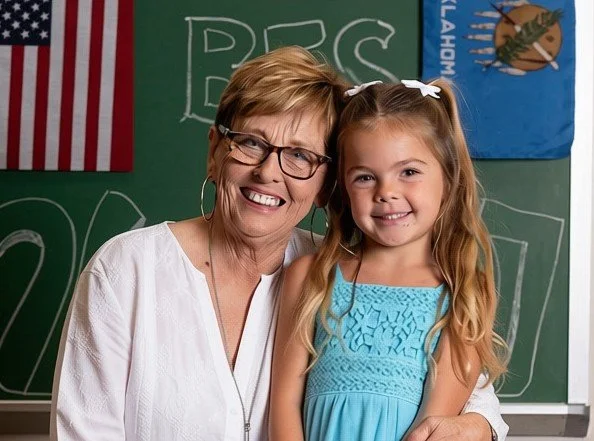
“The system is broken,” people say about our schools. Test scores are rolling in at all-time lows as students pass through the process often unchallenged, mostly disengaged, and ultimately wildly unprepared for the world they’re stepping into. We point fingers in all directions, as those both in and outside the bureaucracy argue about what should change and how.
Meanwhile, fifteen five-year-olds are learning to be kind.
Pundits debate the length of the school year, the hours of an instruction day. Whether we can afford to pause for outdoor recess or commit time to learn to draw and paint or sing and dance. We borrow half an hour here, give one back before spring break. The tussle never ends.
Meanwhile, fifteen five-year-olds are learning to be kind.
School boards and administrations wrestle with what to do with student cell phones. The public fights about which books deserve to sit on library shelves. Collectively, we, with one eye open, one eye closed, run with terror from AI while the Information Autobahn sometimes renders what a teacher plans to teach as obsolete before she can even teach it. With no road map for such rampant change, people run around at their wit’s end, in circles screaming, “Fire!”
Meanwhile, fifteen five-year-olds are learning to be kind.
In many ways our educational system might be fractured. Its internal architecture very well may have outgrown itself. Those with rocks in their pockets cry, “The way we operate is archaic!” “Leave character education to the parents.” “Focus on teaching our children to read.” The desperate shout, “Schools need to stay in their lane!” Those trekking through the trenches do not vehemently disagree.
They also know the things our children can’t afford to do without.
After a post-dinner disco dance performance where Scottie shadowed Austyn’s every move, the family cleared the dining table. In the kitchen, I filled the sink for dirty dishes while breathing a silent prayer for Austyn’s teacher. May she never lose the knack for mixing information and behavior in a way that makes both stick.
My prayer was interrupted by a tug on the hem of my shorts. “GG, hold you.” Two-year-old Scottie sucked me in with an opposite pronoun, innocent baby kindness and outstretched, yearning arms.
I dried my hands and picked her up. Her round blue eyes just inches from my face, she said with Angelic deliberation, “Kindness. Doesn’t. Cost. Anything.” Like a squirrel who had holed away an acorn, she’d pocketed Austyn’s dinner-time preamble and pulled it out for GG’s show-and-tell.
She’s two. A little sister parrot.
And yet, the ripple has been sent to sea.
P.S. Keaton’s K Club