
Patterns
Just inside the door in giant half-way cursive letters, the wall that wouldn’t let your eyes look anywhere else, read: “Success leaves footprints—find them and follow them.” Below the words were action photos of our All-Americans in the stances that made them famous with I-know-what-I’m-doing intensity on their faces.
“Study them,” we’d tell our newbies. “These players are as different as their jersey numbers (some were posts, some were guards, some played anywhere and everywhere we had to have them) but they had core things in common. They were unselfish, they were tough, they were disciplined, they made the people around them better.”
The competitive lives of the stars on the wall were templates for wanna-be champions. What an edge to have a pattern you can lay on top of your days to help trace the road you want to run down.
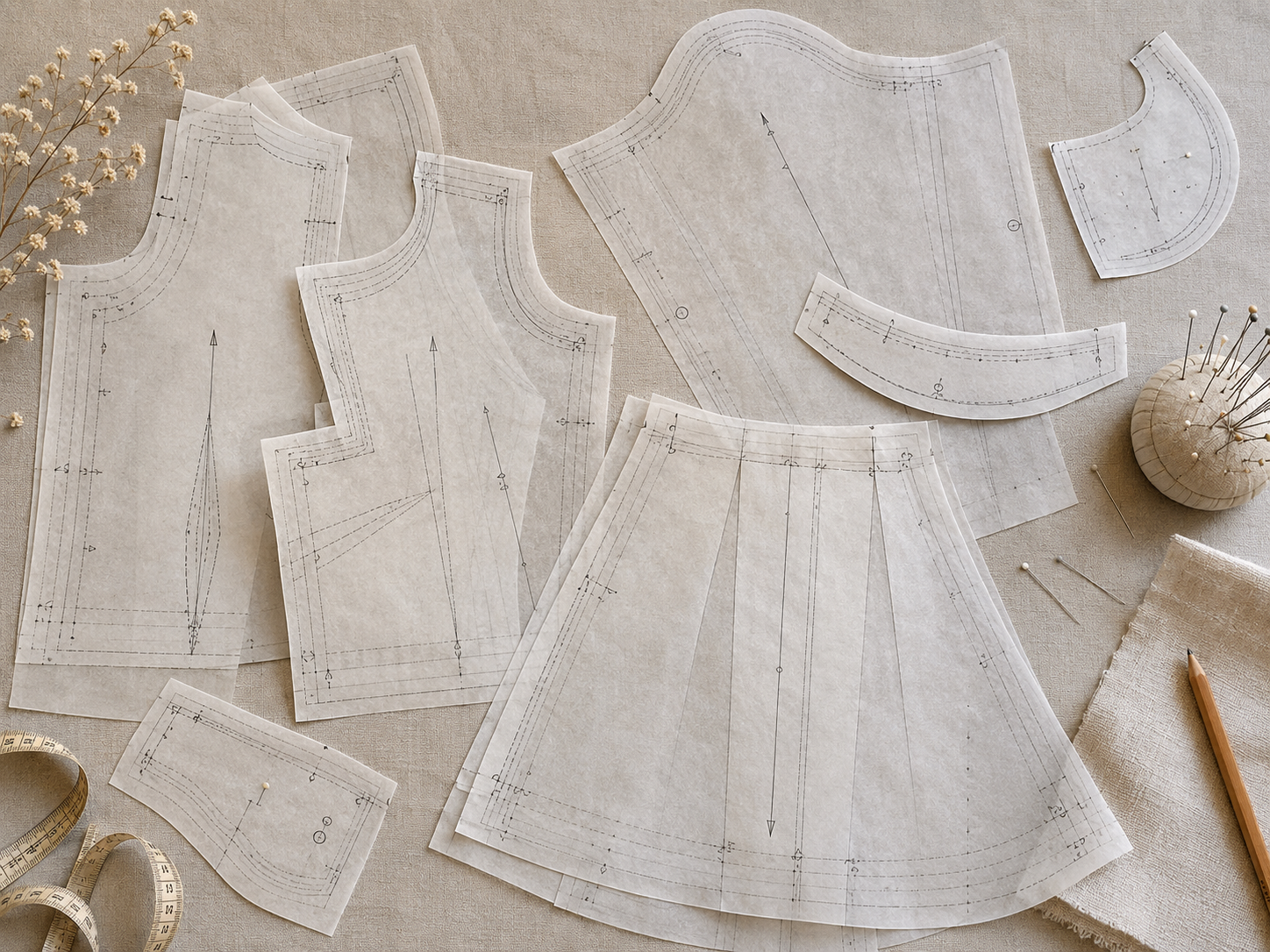
My Granny was a seamstress. She had drawers and drawers and drawers-and-drawers of tissue-paper patterns that came in over-sized envelopes with pictures of finished fashions on the front. She packed the McCall’s and the Simplicity’s neatly in rows according to a system that only she could decipher and she kept them forever because they could always be re-used. The outside of the packages showed what the neatly folded sections of transparent tissue could lead to—a beautifully form-fitted shirtwaist dress, a blouse with raglan sleeves. Like Stephen Covey’s Habit #2, each one of Granny’s creations began with the end in mind.
The tan see-through paper was imprinted with grainlines, long straight roads with arrows at the ends indicating how to align the cut-out with the woven threads of fabric. Abuzz with all kinds of triangle wedges, squares and notches, solid, dotted and parallel lines, the patterns read like a Russian novel to me. But Granny knew just how to interpret them. She would pin a block carefully to her fabric of choice, arranging it to take advantage of the fibers while simultaneously not wasting material. When everything was perfectly positioned, she would cut.
The pattern got her ¾ down the road.
A traceable example can keep us from making the same mistakes others who’ve gone before us have made. It can help us solve problems more efficiently, remove guesswork, harness brain power, re-create success. Patterns give us intel, helping to maximize opportunity while minimizing risk. But there’s nothing easy about doing hard things, even if and when you have a guide.
Deep work is required.
And misfires are a guarantee.
I can’t remember a single day while we were growing up in which my Granny didn’t have one sewing project or another in mid-stream. In the spare bedroom where no one ever slept, fabric was everywhere—some pinned to patterns, some cut and piled awaiting assembly, some basted together in line for a final fit. Many works-in-progress never made it down the pike.
A mound of not-quite-rights littered the closet floor.
Despite the careful calculations and an outline she could follow, Granny ripped as many stitches as she sewed. “Heavens to Betsy!” I would hear from the corner of the kitchen where the well-worn Singer sat. She wasn’t fond of starting over but she did it all the time.
Though it’s how you get there, three steps forward two steps back is a science inexact. Even with a pattern as a guide.
P.S. Nash Cracks the Code