
Yours. Mine. Ours.
In a happenstance conversation on an airplane with a seasoned elementary school teacher who had decided to call it quits, I asked, “What was the biggest change you witnessed over your three decades of growing kids?”
“Parents,” she paused in thoughtful survey, “parents used to want their children to be successful.” I noticed a hint of nostalgic wistfulness in her eye, as she continued, “Now all they want is for them to be happy.”
I wondered how and why the two had become such disparate things.
People who do what they love dent the world. Sometimes they mean to, sometimes they don’t. It’s almost impossible, however, not to notice where passionate people have been. Their living leaves a mark.
Those who are head-over-heels and starry-eyed-drunk about how they spend their days typically get good at what they spend their days doing. That’s how and why they notch a trail. They have fun. They rarely appear fatigued. Their effort seems less sweaty than their gritty counterparts. It’s not that they work any less hard, it’s just that they look different than others while they’re doing it. As a result, these lovers of what they do often lap the competition because they run on self-generated fuel. For them the work is the win.
Happy isn’t put on hold while they wait for results to come in. The joy is in the doing, not just the getting done.

Recently, someone asked me at a women’s luncheon during an on-stage question-and-answer session, “How do we help our children find their calling?” The question is age-old, but somehow it landed new in the room. A dressed-to-the-nines, seemingly happy, mother of cusp-of-adulthood kids really wanted to know. She wanted to see hers self-propel, whistling while they worked. When she asked, every table—many mothers at various stages--leaned in like a human tsunami.
“How do we motivate our kids to mine for work they love?”
That’s a tough one. Mostly because it’s not really even our job. To make it so would falsify the find.
Yet, we cannot help ourselves. Because we feel responsible (and because it’s emotionally easier, if we’re really being honest), our first instinct is to tell our children what they should do. Or could do. Or how they better go about figuring out which is which. It isn’t fun to watch them flounder. The urge to steer seems to be in our Wharton’s jelly, though the umbilical cord was physically clipped and tied at birth. We want our babies to do well. We want them to be happy. It is (it must be!) our responsibility to help them find their way.
Ehhhhhh. Maybe less is more. Maybe they’d be better served by breathing room.
It’s not that they don’t need us. It’s just that they don’t need us getting in the way.
Perhaps the move is tossing out some questions, then settling into a hammock to sway for a spell and observe. So often, if we hide and watch—though the course may get scary and crooked-- they will sink into their bliss.
“What makes your heart sing?” we might ask them. “What can you not imagine not getting to do?”
“Listen closely,” might be the lone directive. “Listen, and follow what you hear.”
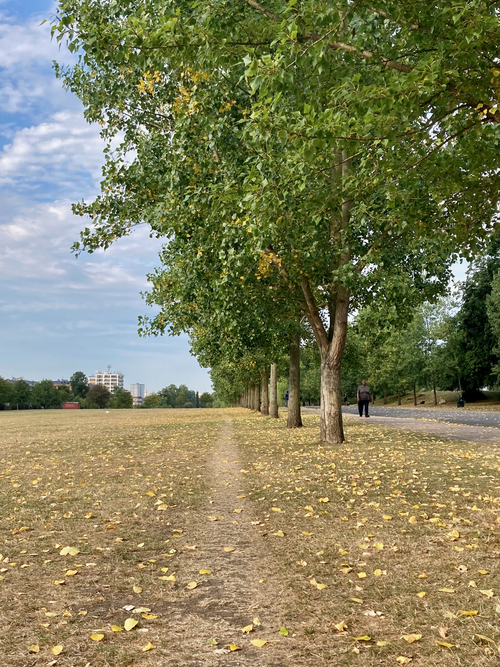
On any college campus, or in the city after snowfall, or at the corners of a park, lie beaten paths. Places where the sidewalk doesn’t go but people do. These user-generated trails portray convenience or maybe simply preference. The trampling that created them isn’t suggested, dictated or forced. It is simply a route that random people chose to take because it fit their purpose. They made an attempt and left a track.
Urban planners call these movement patterns “design paths.” In southern Oklahoma, we just call them cow trails. Places where the grass dies due to tromping. They represent the way a soul is pulled to go.
“Where might you move if all around was silent?”
In the answer to that question lies your calling.
Our kids, if given leash to wade, to wander and to wonder, will show us what they love.
P.S. Because I said So