
Shedding
The old oak tree at the very edge of the property is the last to let go of its leaves in the fall and the last to push buds in the spring. Every year I worry as I walk past it. Is it gone? Is it finally too tired to do it all again? I walk, watch and worry. Walk, watch and worry. Walk, watch and worry. Then one night while I’m sleeping, the grand, wily tree erupts. As day breaks, I pass by its sprawling branches full of rich green buds. “Welcome back!” I think and say out loud. Within a couple of days, it has the biggest, brightest, fullest, thickest canopy of any tree on the place. I hear it mock me as I make my rounds.
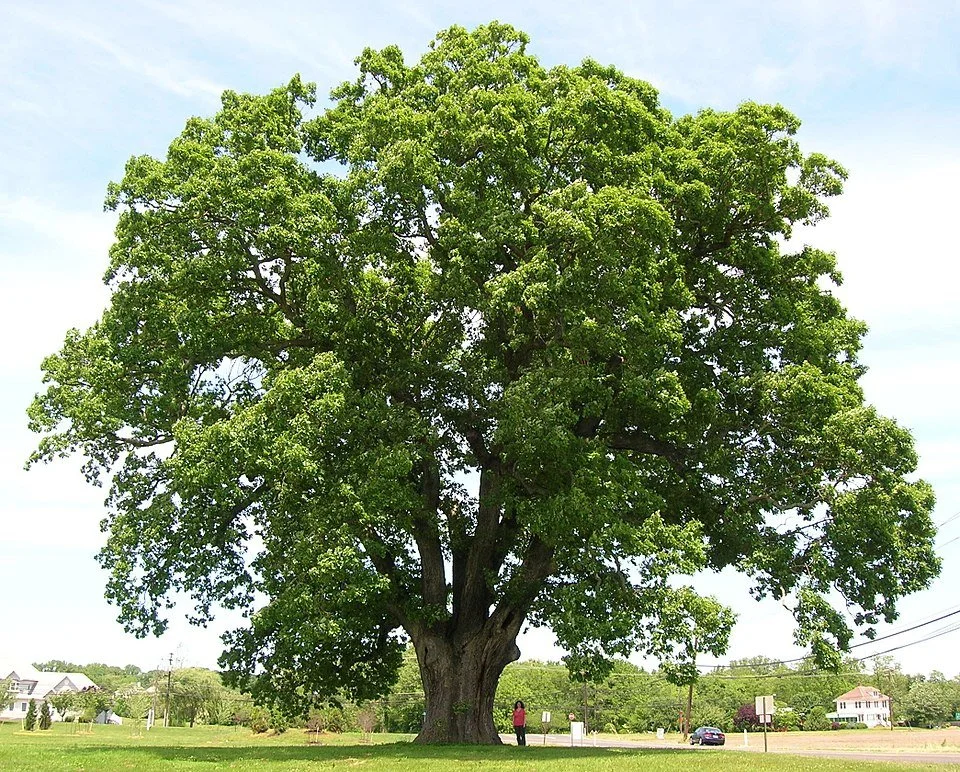

“Gotcha. Again.”
It happens every go ‘round. It gets me. Something about its out-of-the-ordinary transitions feels remiss. Its typical tardiness troubles me.
The oak tree has its reasons, certainly. Science says late leaf drop is a trait called marcescence, and that it is most common in younger trees. A bit of digging also reveals that the “condition” serves both environmental and evolutionary purposes. Likewise, late can also be attributed to climate survival and perpetuation. Everything from genetic engineering to factors like extreme drought or extraordinary cold temperatures to root damage at a young age can cause an oak to hold its cards and play them late. Explanations like that give us some relief. We need to understand the oddities of nature. It helps us comprehend the ones we discover in ourselves.
Trees, like those of us who marvel at them, adapt and cycle at their distinctive pace. An oak tree’s fight for life is peculiar to it and it alone. Its rhythm is dissimilar from those that grow ten feet to the right or twenty to the left . . . those planted thirty years before or ten years after—or others, even, put into the ground on the same day. How one tree reacts to the elements is not how its neighbor does. Every living thing has an individual ready stance. Thriving is a secret recipe known only to the anatomy of a thriver.
But we crave the decoding, the knowledge of the heavenly Bio-designer’s timing, the reverent irreverence of the order of things. And yet . . .
We can’t. A 41-year-old seemingly healthy, elite athlete dies suddenly from pneumonia. What happens? An almost 80-year-old in a disease-ravaged body who is begging to die, keeps living. How does the body hold on? We cannot know.
In the smallness of our human minds, we can’t make the algebraic problem compute. We thirst for things we can set our watch by. The out-of-order makes us twitchy. Unfortunately, shedding and sprouting happen to the tick of a clock whose dial we don’t control.
Sureness, a tool wielded mostly by arrogants and fools, is at its best a 50/50 play. The second we think we know, we’re reminded that we don’t. While science and experts and even personal experience provide various varieties of explanations for what happens when it does and why, just as many riddles without answers remain.
Still, we want what we want when we want it. Or at least when we expect it. Our definition of fair.
The oak lauding over the land endures as a palpable reminder that we just never know.